ServicesResidential Roofing
Residential Roofing in Keller, TX
A storm went through and now you are looking up at your roof wondering what to do. We come out, look at it with you, and tell you plainly what it needs. You get a written estimate and time to think before anything happens.
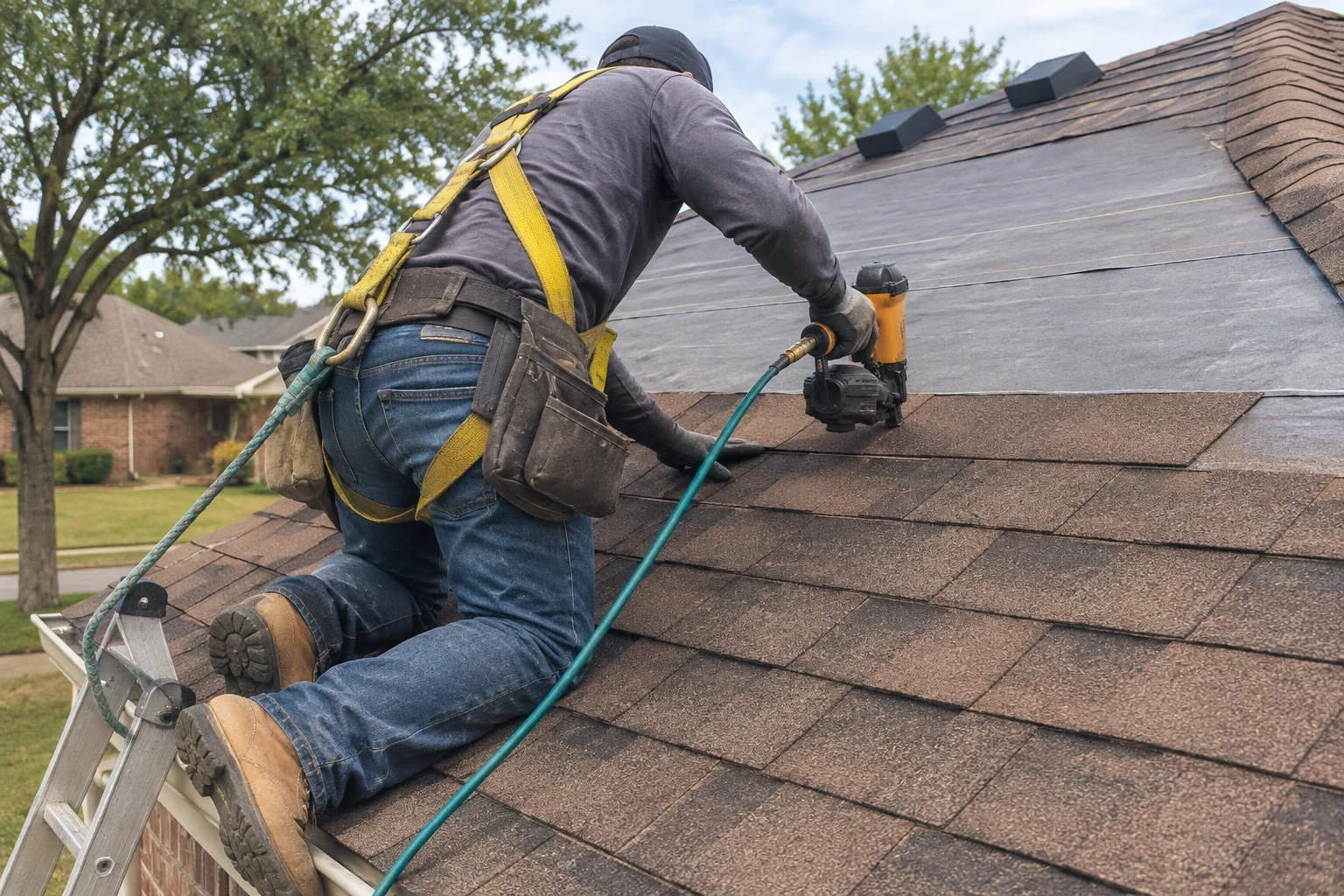
A roof for your home, done in the right order
Residential roofing is the full system over your head: decking, underlayment, shingles, flashing, vents and ridge cap. When one part fails, water finds the gap. We build the whole system so the parts work together.
After hail or high wind, the first days matter. Small openings let rain into the decking and insulation, and the damage grows quietly. We help you see what happened, cover what needs covering, and plan the work without rushing you into a decision.
We have 10 years of experience on homes like yours, and we are insured. You deal with the same crew from the first visit to the last nail.
What goes into the job
- 01
Old roof off, down to the wood
Every old shingle and layer of underlayment comes off first. The bare deck is where rot or soft spots show up, so you find out now instead of two years from now.
- 02
Bad decking swapped out
Any board that is soft or water-stained gets cut out and replaced. You get a photo of each one, and the count shows up on your estimate.
- 03
Underlayment and ice-and-water barrier
The full deck gets covered in synthetic underlayment. Valleys and the spots around pipes and vents get a self-sealing barrier, because water moves fastest there.
- 04
New flashing at chimneys, walls and pipes
Most leaks begin at the metal, not the shingles. We put in new flashing instead of patching old metal with more caulk.
- 05
Shingles and ridge cap
Each shingle is nailed the way the manufacturer calls for. If hail worries you, ask us about impact-rated shingles.
- 06
Attic ventilation
Air needs to come in low and go out high in even amounts. When attic heat gets trapped, it bakes the shingles from underneath and they wear out sooner.
Questions about Residential Roofing?
Call(817) 670-3022Signs your roof needs attention
Dents or bruises after hail
Look at soft metal first: vents, flashing, the AC unit. If those are dented, the shingles likely took hits too.
Granules piling up
Shingles shed their gritty coating as they wear or get struck. Heavy granules at downspouts or on the driveway mean the asphalt underneath is exposed.
Lifted, creased or missing shingles
Wind breaks the seal strip and folds shingles back. Once the seal is gone, the next storm can peel them off.
Stains on the ceiling
A brown ring inside means water has been getting through for a while. The source is often several feet uphill from the stain.
A sagging or wavy roofline
This usually points to wet or failing decking. It needs a close look before the next heavy rain.
How the job goes, first call to final walkthrough
- 1
Your first call
Tell us what you noticed and when the storm came through. We pick a visit time that fits your week.
- 2
On the roof with a camera
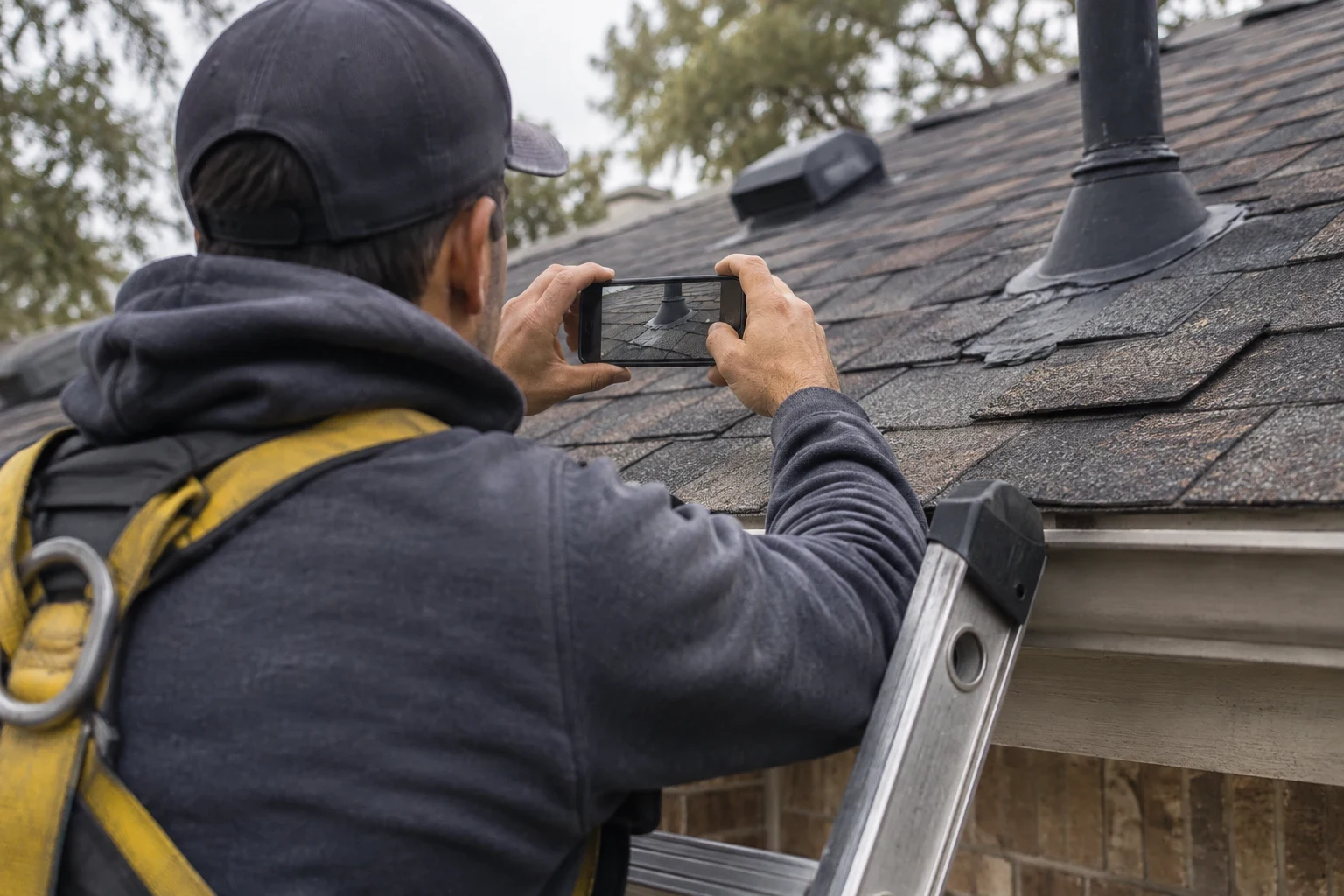
We walk the roof, look in the attic when there is a way in, and take pictures of each problem. Those same pictures go to you.
- 3
An estimate you can read
Labor, materials and likely decking work each get their own line. If you have a claim open, we walk you through how it usually goes, but the coverage decision belongs to your adjuster.
- 4
The work days
We cover plants and shield windows and the driveway. The old roof comes off, the deck is dried in before we leave that day, and the new roof goes on. Most homes take one to two days, depending on weather.
- 5
Cleanup and a walk around together
A magnetic sweeper goes over the lawn and driveway to catch loose nails, and the debris leaves with us. Then we look over the finished roof with you before we wrap up.
What drives the price of your roof
Every roof gets its own number. We measure yours on site rather than estimating from an aerial photo. Here is what raises or lowers your price, and each item is spelled out for you on paper.
- Roof size and steepness
- More roof means more material. A steeper pitch calls for added safety equipment and slows the crew down.
- The shingle you choose
- Impact-rated shingles cost more than architectural ones. They may also affect your insurance premium, so it can pay to check with your agent.
- Condition of the decking
- How much wood needs replacing stays unknown until the old shingles are off. Your estimate sets a per-board price in advance, so the possible range is clear.
- Existing layers and openings
- Removing two old layers of shingles takes longer than removing one. Chimneys, skylights and many vents add flashing work.
Questions about your home's roof
Should I call you or file a claim first?
Either order works. Many homeowners reach out to us first to find out what is actually on the roof before talking to the adjuster. You get our photos and notes, but we do not act as your adjuster or negotiate the claim.
How soon after a storm should the roof be checked?
Within a few days is best. Each rain gives water that is getting in another chance to cause damage. If there is an opening, we can talk about covering it while you weigh the rest.
Will I need to be home during the work?
Just a couple of times. We want to see you at the start and at the final walkthrough. Keep pets inside and get cars out of the garage and driveway.
Is there a warranty on the work?
Our workmanship warranty applies to eligible projects, with coverage that depends on the service. The shingle manufacturer also has its own product warranty. We go over both before you sign.
How do I know you aren't upselling me?
Every problem we list has a photo to go with it. If a section of the roof is fine, we tell you. You are welcome to take our written estimate and get other opinions.
Get a straight answer about your roof
We will come out, look at it with you, and put the plan in writing. No pressure to decide that day.